
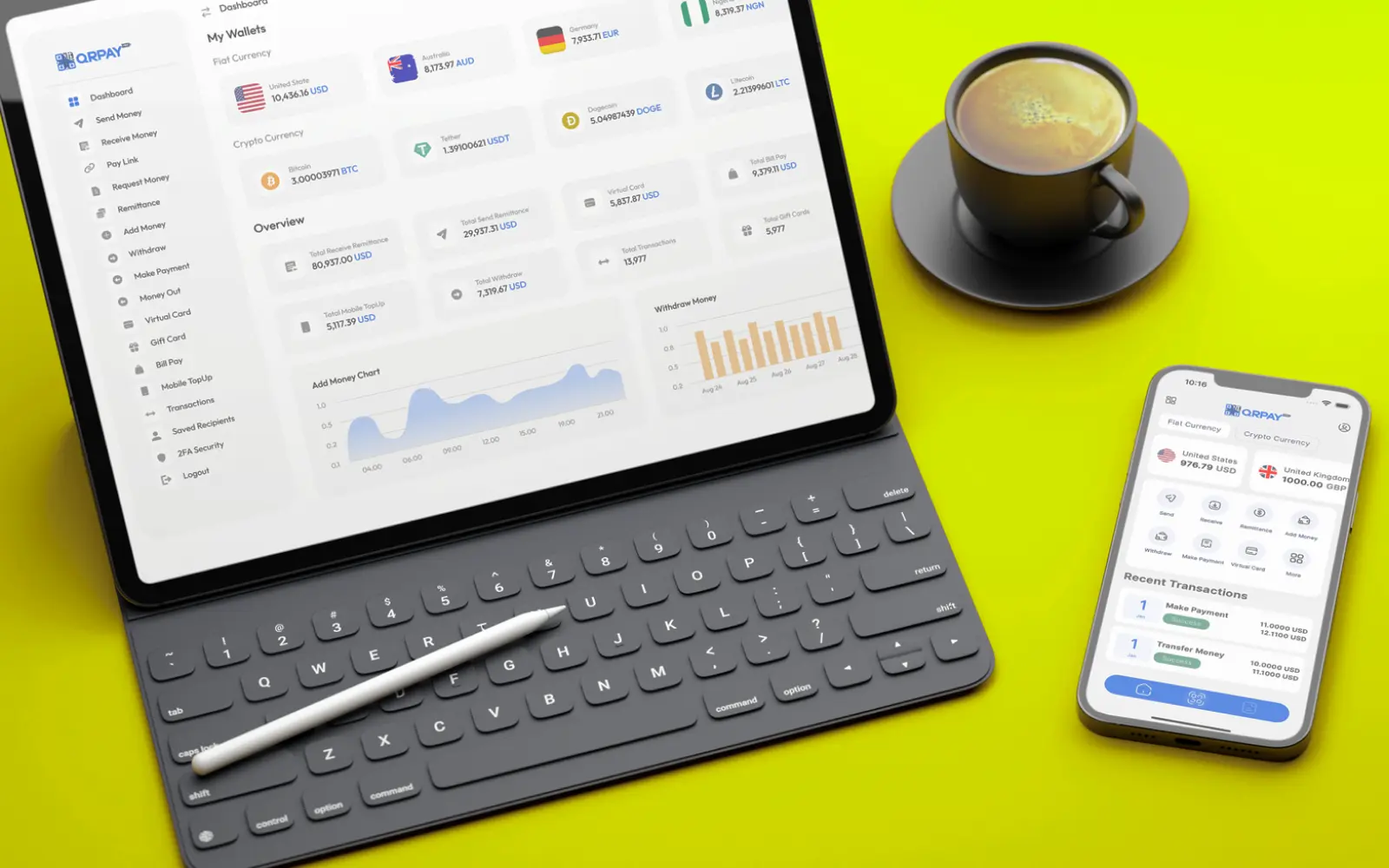
What is CardForge?
BIN sponsorship-ready issuing platform: virtual cards, physical fulfilment, 3DS 2.2, spend rules, and embedded card UX.
Who this is for
CardForge is built for teams shipping in the Full Applications space and operating at production scale. If you're past the prototype stage and need ledger-grade primitives, KYC tooling, and operator-ready dashboards from day one, you're in the right place.
What's in the box
- Production-ready Laravel, Flutter source with CI/CD pipelines wired up
- Terraform modules for AWS, GCP, and DigitalOcean deployments
- Operator runbooks: onboarding, transaction lifecycle, dispute handling, reconciliation
- Pre-integrated adapters for the partners you'll actually call: KYC providers, sponsor banks, payment processors
- Architecture diagrams and a documented permission/RBAC model
How operators use this in production
The platform's data plane is layered cleanly: edge surfaces talk to core services; core services own the ledger; partner integrations live at the boundary — never in the middle. Your team owns and extends the core; the integration adapters are isolated so partner churn doesn't touch your business logic.
POST /api/transactions
{
  "amount": 1500,
  "currency": "USD",
  "source": "wallet:9X42",
  "destination": "wallet:K81P"
}
Deployment options at a glance
| Option | Time-to-live | Best for |
|---|---|---|
| Managed cloud (Terraform) | ~1 week | Startups and early-stage operators |
| Self-hosted single-region | 2–3 weeks | Regulated entities with on-prem requirements |
| Multi-region active/active | 6–8 weeks | Scale-stage operators across geos |
"We launched our wallet in eight weeks on this. The runbooks paid for themselves in the first month." — Operator at a fintech that prefers to stay anonymous
What you don't have to build
The full list of things you skip when you start from CardForge includes the parts most teams underestimate: a deterministic ledger, idempotent webhook handling, hold/release state machines, KYC tier transitions, settlement reconciliation, and the operator UI to run all of it.
Read the full architecture in the documentation or jump straight to the feature list.